Currently Empty: $0.00


Top 10 Benefits of Using Advanced CTG Machines in Hospitals
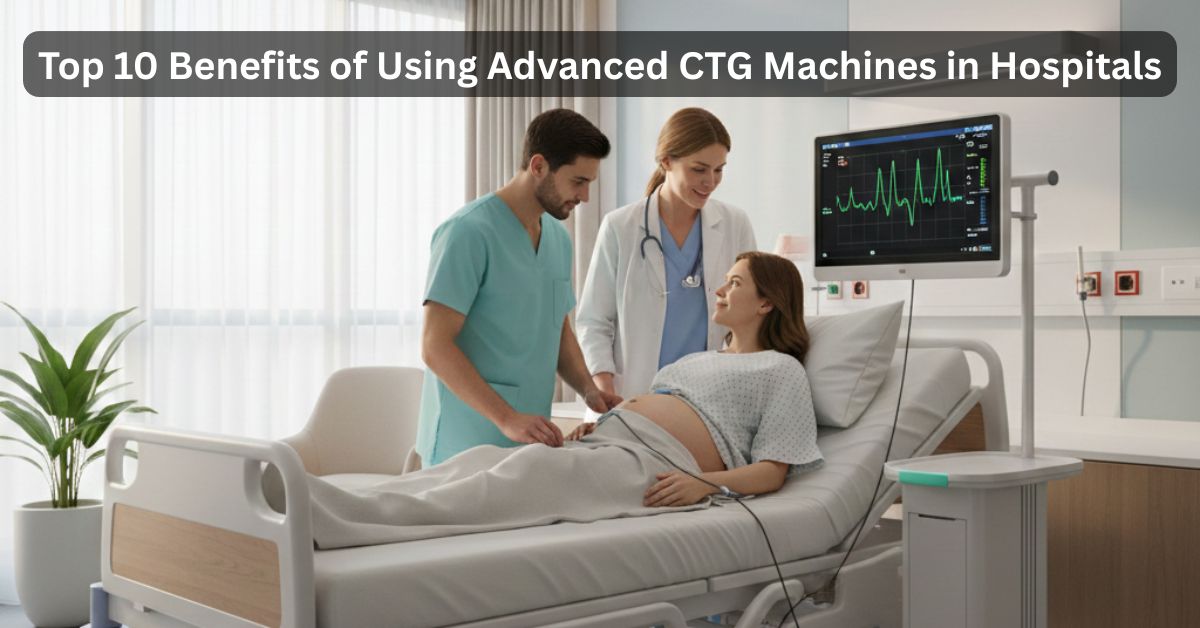
Maternity care is advancing quickly, and families expect hospitals to provide the safest possible environment during childbirth. They rely on doctors and maternity teams to make timely decisions supported by reliable technology. As delivery cases grow more complex, the need for smarter monitoring tools in labor rooms is becoming increasingly important. These technologies help spot problems early and support better outcomes for both mother and baby.
Modern fetal monitoring systems do much more than track heartbeats on a screen. They analyze patterns, issue alerts when something looks unusual, and store information digitally for easy review. This gives clinicians clearer insight during labor, reduces uncertainty, and helps them respond faster when needed. In busy maternity wards, such support can make a meaningful difference in every delivery.
Contents
- What Is a CTG Machine?
- 1. Early Detection of Fetal Distress
- 2. Improved Accuracy and Consistency
- 3. Enhanced Maternal Safety
- 4. Digital Reports and Better Record-Keeping
- 5. Remote Fetal Monitoring and Telemedicine Support
- 6. Workflow Efficiency in the Labor Room
- 7. Support from AI-Driven Analysis
- 8. Reduced Labor and Delivery Complications
- 9. Confident, Data-Driven Decisions
- 10. Future-Ready Technology for Modern Hospitals
- Why Hospitals Should Upgrade Old CTG Machines
What Is a CTG Machine?
A CTG (Cardiotocography) machine is a fetal monitoring device that records:
- The baby’s heart rate
- The mother’s uterine contractions
The data appears as graphs (called “traces”). Doctors and nurses use these traces to understand how well the baby is coping with labor and whether any distress is developing.
Modern digital CTG machines add features like real-time analysis, wireless monitoring, remote viewing, and automated reports — turning CTG into a smarter, safer tool for maternal and fetal health monitoring.
The Top 10 Benefits of Using Advanced CTG Machines in Hospitals
Each benefit below highlights how CTG improves safety, efficiency, and outcomes in maternity wards.
1. Early Detection of Fetal Distress
One of the most important CTG machine benefits is early warning.
Advanced cardiotocography machines continuously track fetal heart patterns and automatically flag abnormalities. When subtle distress appears reduced variability, late decelerations, or unusual rhythms, clinicians are alerted sooner.
What this means in practice:
- Faster interventions
- Reduced risk of birth complications
- Safer outcomes for both mother and child
Early detection can prevent emergencies, avoid unnecessary C-sections, and give teams more time to act.
2. Improved Accuracy and Consistency
Traditional paper-based CTG traces can be difficult to interpret, and human error is always possible.
With digital CTG machines, data is clearer, standardized, and easier to review.
Benefits include:
- Automated interpretation support
- Clear visual graphs
- Fewer missing data points
- Consistent monitoring across caregivers
Advanced systems help gynecologists and obstetricians interpret patterns more confidently, reducing disagreement and uncertainty during CTG monitoring in labor.
3. Enhanced Maternal Safety
Labor complications can escalate quickly. Continuous maternal and fetal health monitoring allows care teams to track both the baby and the mother simultaneously.
Hospitals equipped with smart fetal monitoring can better manage:
- High-risk pregnancies
- Induced labor
- Pre-eclampsia
- Multiple pregnancies
- VBAC (Vaginal Birth After Cesarean)
Timely alerts make delivery rooms safer, supporting rapid responses when something changes.
4. Digital Reports and Better Record-Keeping
Manual charts can be misplaced or hard to analyze later. Advanced CTG systems automatically capture, store, and back up records — making labor documentation traceable and compliant.
Hospitals benefit from:
- Digital CTG reports accessible anytime
- Easier medico-legal documentation
- Long-term data analytics
- Reduced paperwork for staff
For audit trails and quality improvement, digital storage is invaluable.
5. Remote Fetal Monitoring and Telemedicine Support
Modern maternity units are often busy and spread across floors. With remote fetal monitoring, clinicians can observe CTG traces from nursing stations — or even collaborate with specialists off-site.
This is especially powerful for:
- Rural hospitals
- High-risk pregnancy clinics
- Limited staffing situations
Remote access lets experts review CTG data immediately, improving decision-making and preventing delays.
6. Workflow Efficiency in the Labor Room
Advanced CTG machines are designed as part of hospital delivery room equipment, not just standalone monitors.
They streamline workflows with:
- Wireless sensors for patient mobility
- Automated alerts
- Quick plug-and-play setup
- Integration with hospital information systems
Less time troubleshooting devices means more time focusing on patient care.
7. Support from AI-Driven Analysis
Many smart fetal monitoring systems now include AI-assisted interpretation tools. These don’t replace doctors — they support them by highlighting risk patterns and suggesting observations.
AI helps by:
- Reducing subjectivity in CTG interpretation
- Standardizing assessments across staff
- Acting as an extra “set of eyes”
For junior doctors or busy maternity teams, this support can be invaluable.
8. Reduced Labor and Delivery Complications
When fetal distress is identified sooner, interventions are safer and more controlled. Evidence shows that proactive monitoring can help reduce:
- Emergency cesareans caused by last-minute distress
- Neonatal complications like oxygen deprivation
- Risk of postpartum complications related to prolonged labor
Advanced CTG contributes directly to improved patient outcomes.
9. Confident, Data-Driven Decisions
Accurate data builds confidence. With clear digital traces and trend analysis, obstetric teams can make informed choices about labor progression, induction timing, or emergency intervention.
Real-time insight enables:
- Faster team communication
- Shared understanding among staff
- Better explanations to families during critical moments
In stressful delivery situations, having reliable data changes everything.
10. Future-Ready Technology for Modern Hospitals
Healthcare is moving toward digital transformation.
Upgrading to the best CTG machines for hospitals helps institutions stay competitive, attract patients, and prepare for AI-assisted and cloud-connected maternity care systems.
Hospitals using outdated fetal monitors risk:
- Inconsistent data
- Poor integration with digital records
- Delayed diagnosis potential
Modern advanced CTG machines for hospitals bridge technology, safety, and patient trust.
Why Hospitals Should Upgrade Old CTG Machines
If your maternity ward still relies on older analog systems, the gap is widening.
Upgrading brings:
- Stronger patient confidence: Modern fetal monitoring reassures families that hospitals use advanced technology to protect mothers and babies.It builds trust and enhances the hospital’s reputation for safe maternity care.
- Faster, safer decision-making: Real-time analysis and alerts help clinicians act earlier during labor. This reduces delays and lowers the risk of emergency complications.
- Full digital records: Automatic storage keeps CTG data organized, traceable, and easy to review. It also supports medico-legal documentation and quality audits.
- Support for remote consultations: Specialists can review monitoring data from any location. This enables faster expert opinions, especially in high-risk or rural settings.
- Better monitoring accuracy: Upgraded systems minimize interpretation errors and improve clarity. They provide more reliable information when every second matters.
In an era where families research technology before choosing hospitals, modern fetal monitoring becomes a key differentiator.
A Safer Future with Advanced CTG Machines
Adopting modern CTG technology isn’t just about upgrading equipment — it’s about raising the standard of maternity care. With better visibility into fetal well-being, earlier alerts, and smarter decision support, teams can respond faster and more confidently. This shift helps prevent avoidable complications and builds greater assurance for families during one of the most important moments of their lives.
For hospitals, moving toward advanced, digital monitoring is an investment in safety, trust, and long-term quality improvement. It supports clinicians, strengthens labor room workflows, and leads to healthier outcomes for mothers and newborns. As maternity care continues to evolve, now is the right time to explore reliable, future-ready CTG solutions that truly make a difference.